

Filter and sort
We can't find any items matching the selected filters.
A bedside lamp serves several purposes in the bedroom. It provides light for reading, makes it easier to find your way around in the evening, and complements the decor right next to the bed. Since the shade and light source are often located near eye level, their shape, material, and lighting effect are particularly noticeable. Therefore, choosing the right one involves considering not only the decor style, but also the height of the nightstand, the desired brightness, and the type of control.
The right bedside lamp should be chosen based on the proportions of the bed and nightstand. The width of the lamp should match the usable shelf space and the size of the nightstand. A wide fixture can dominate a small space, while a very delicate fixture may seem inconspicuous next to a massive piece of furniture. The height of the light source is also a crucial factor. A low-hanging lampshade directs the light more toward the tabletop, making it particularly suitable for providing orientation. A taller lamp can better illuminate the area next to the bed as well as the reading area.
In addition to the proportions, it is important to have enough free counter space. A bedside lamp should be placed far enough away from books, a glass of water, or an alarm clock, and should be easy to turn on without having to reach awkwardly. For narrow pieces of furniture, compact models with a stable base are ideal. A well-designed cable routing system helps keep the fixture neatly in place and reduces the risk of it being accidentally moved. It should be positioned so that the light falls on the book, the shelf, or the area next to the bed without the light source being directly visible.
The lighting should be appropriate for its intended purpose: for finding your way around, for reading, or for creating a peaceful atmosphere in the evening. Warm white light helps create a relaxed atmosphere because it feels less clinical than cooler light colors. For longer reading sessions, the brightness should be adjusted so that the pages are evenly lit and there are no sharp light-dark contrasts.
The shape of the shade affects how precisely or broadly the light is distributed. Closed or downward-facing shapes concentrate the light more effectively and are suitable for a limited area. Open shades distribute light more widely throughout the room and can complement general lighting. Opal glass or translucent materials create smooth transitions and minimize distracting differences in brightness. A suitable reading lamp on the nightstand illuminates the pages of the book precisely without unnecessarily brightening the rest of the room.
Designer bedside lamps aren't defined solely by a well-known brand name. The key factors are balanced proportions, high-quality materials, and a design in which form and lighting work together harmoniously. Details such as seams, finishes, and the design of the base and canopy are particularly noticeable when viewed up close.
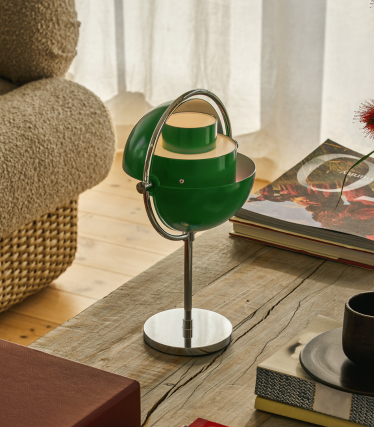
Models from brands such as Louis Poulsen or Globen Lighting can blend discreetly into the decor or serve as a deliberate focal point. Clean lines and understated finishes complement minimalist interiors particularly well, while more expressive forms create a contrast with simple furniture. A stylish bedside lamp looks particularly harmonious when its shape, material, and lighting effects all follow a unified design concept.
Materials influence both the visual effect and the perception of light. Depending on its surface, metal can convey a functional, graphic, or understated impression. Glass can diffuse light evenly, and its transparency makes the light fixture appear less bulky. Fabric shades add a visible fabric texture to the room and shield the light source from the sides, thereby reducing direct glare. Wood and other materials with a distinctive texture are a particularly good fit for natural and Scandinavian interior design styles.
In a high-quality bedside lamp, clean lines, smooth surfaces, and a sturdy construction demonstrate how carefully the materials and components have been crafted. Rounded shapes often appear softer and can be easily combined with upholstered beds or curved furniture. Clean, geometric designs complement minimalist and modern bedrooms, where a few precisely placed elements define the design. The color should also be coordinated with the surroundings. Light tones blend in subtly, while dark or bold finishes create a more pronounced contrast with the wall, bedding, and nightstand.
Compact LED technology can be integrated into sleek and well-balanced luminaire designs. Built-in LEDs often allow for a particularly minimalist design and can be specifically tailored to the design of the bedside lamp. Models with replaceable light sources, on the other hand, offer more flexibility in terms of light color and brightness. Which option is more suitable depends on whether the priority is on lighting technology that is integrated into the design or on the ability to replace the light source at a later date.
The dimmable feature of a bedside lamp allows for different brightness levels to suit various situations. A low brightness level is often sufficient for finding your way around in the evening, while a higher light intensity is recommended for reading. Touch controls can be convenient if you want to be able to turn the light on and off quickly, even in the dark. A standard light switch is just as suitable, provided it is easily within reach from the bed. The key is ease of use that doesn't require any additional devices or complicated settings.